
Veeam’s recovery versatility is one of its greatest strengths, especially when using the Veeam Agent. While OCI doesn’t currently support direct bare-metal restore from Veeam into the cloud, the available restore modes are comprehensive and cover most operational needs.
Even better: you can restore OCI workloads into other virtualization platforms or clouds such as VMware, AHV, or Google Cloud Platform.
Let’s break down all supported recovery scenarios.
1. File-Level Recovery
Restore individual files or folders for both Windows and Linux backups.
No need to rebuild the instance—just mount the backup and recover.
Use cases:
- Accidental deletion
- Targeted application structures
2. Volume-Level Recovery
Recover individual volumes (disks) to fix:
- Corrupt partitions
- Damaged application volumes
- Broken logical volumes
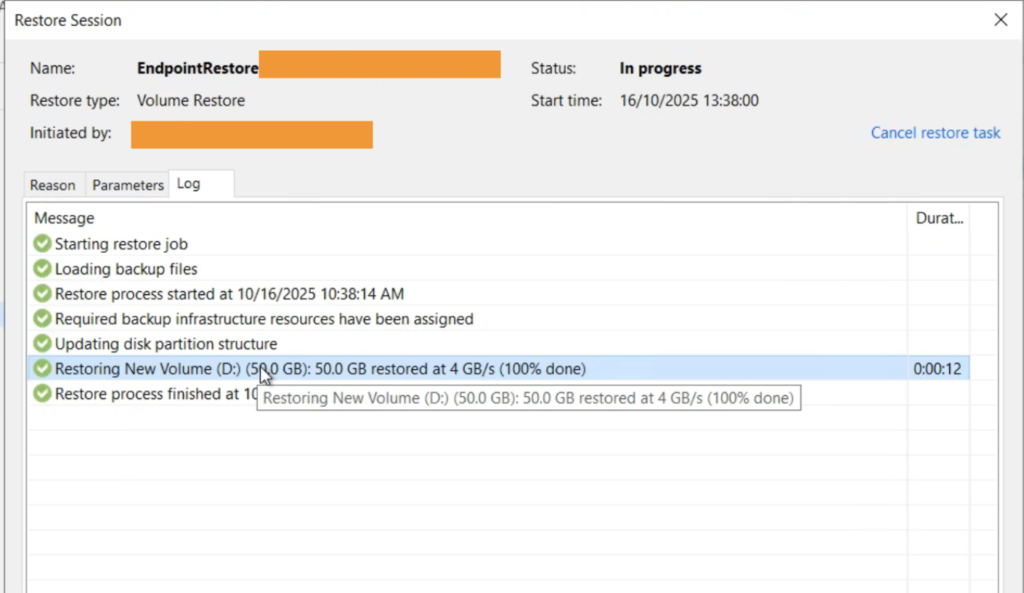
The restored data can be written into:
- The same OCI VM
- A different OCI VM
- A fresh block volume attached to another instance
3. Application-Item Recovery
When backups are taken with application-aware processing, Veeam unlocks granular restore tools such as:
- Veeam Explorer for Active Directory
- Veeam Explorer for SQL Server
- Veeam Explorer for Exchange
- Veeam Explorer for Oracle
- Veeam Explorer for PostgreSQL
- Veeam Explorer for MongoDB
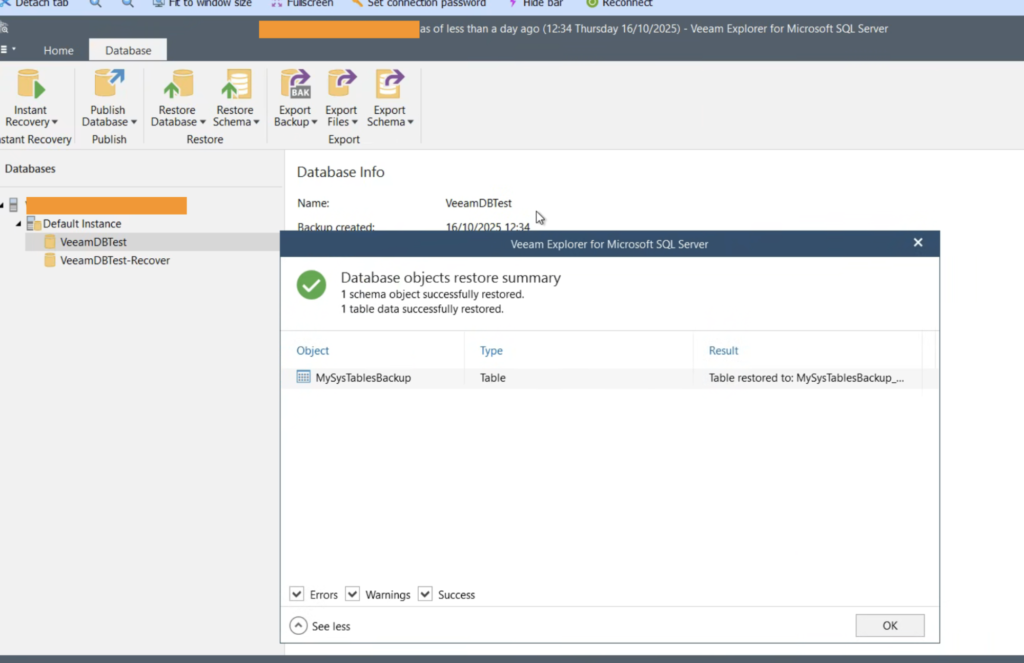
This allows you to recover key business objects without touching the whole VM.
4. Cross-Platform Recovery (VMware, Hyper-V, GCP, and More).
Because Veeam Agent backups are stored in a platform-independent disk and metadata format, restore points can be used to create VMs in other infrastructures.
This makes Veeam a true “universal recovery” engine, letting you move OCI workloads back on-prem, to another cloud, or into a DR environment as needed.

5. Recover to OCI Native.
While Veeam Agent supports BMR in general, OCI’s bootloader and disk format constraints mean direct BMR into OCI is not fully supported. That’s why a workaround is required covered in third part.
Leave a Reply